Maca (Lepidium mevenii) Root Extract
≤ 200 mg1st of 22 — the largest by weight, and the amount is not stated
"Glyco Harmony is a dietary supplement in liquid drops for glucose support."
Use case: Adults who prefer a liquid take one 1 ml serving a day from the 2 fl oz (60 ml) dropper bottle.
How it works: The panel prints 0.7 mcg of chromium plus a 200 mg blend of 22 ingredients, with gymnema as the main blood sugar botanical.
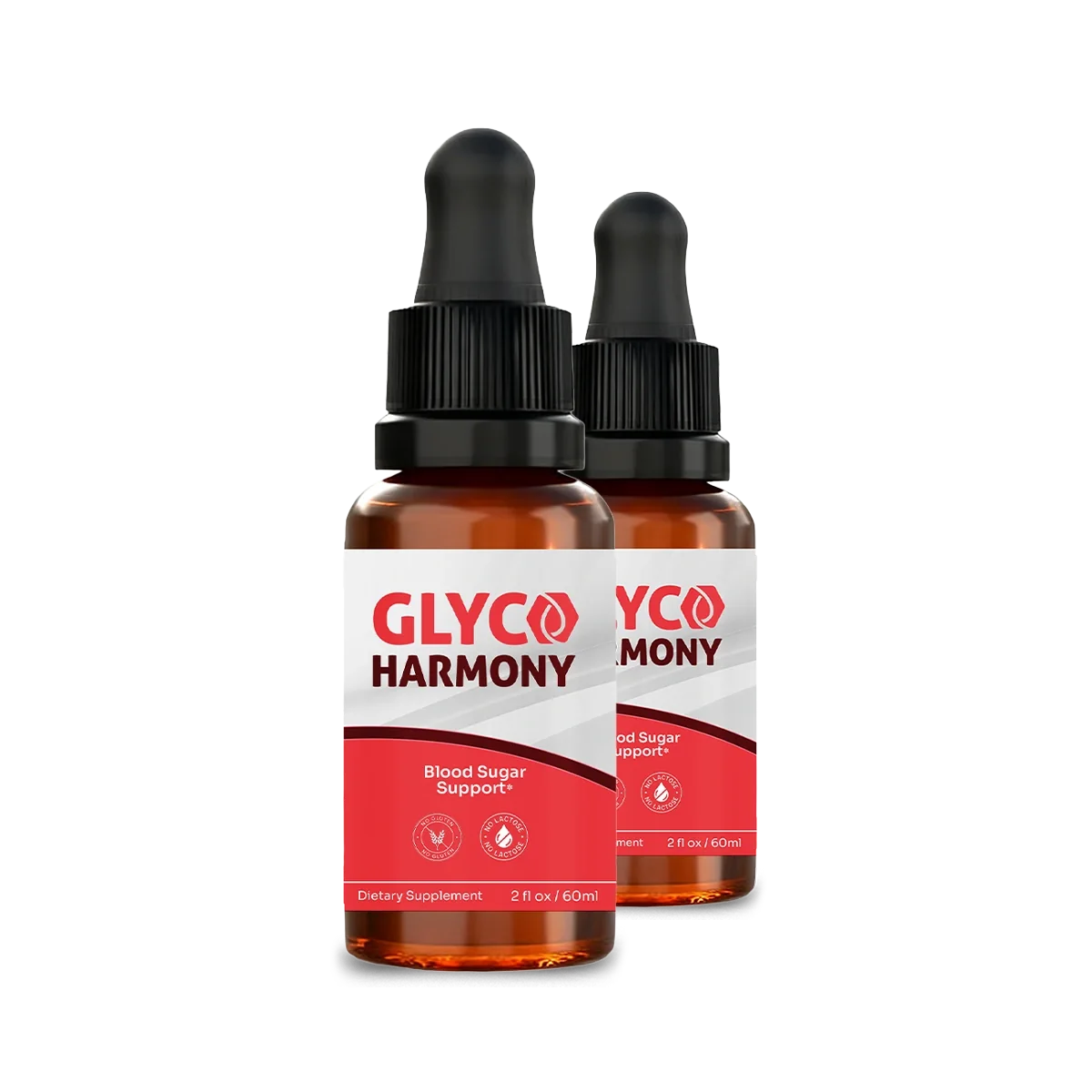


Glyco Harmony is a liquid dietary supplement in a 2 fl oz (60 ml) dropper bottle, with 60 servings of 1 ml. The panel prints one amount, 0.7 mcg of chromium, plus a 200 mg blend of 22 ingredients. Price is shown at checkout.
Every line below is read off the printed label or the brief we were given. Where nothing was published, the row says so rather than guessing.
| Detail | What the label and the seller say |
|---|---|
| Product | Glyco Harmony, a blood sugar support supplement in liquid drops |
| Front of bottle | GLYCO HARMONY · Blood Sugar Support* · Dietary Supplement · 2 fl oz / 60 ml |
| Net quantity | 2 fl oz (60 ml) in an amber glass dropper bottle |
| Serving | 1 ml. Servings per container: 60 |
| Suggested use | Shake well. Take 1 or 2 droppers full daily. Place in mouth and swallow |
| Supply per bottle | 30 or 60 days, depending which half of that sentence you follow |
| Declared amounts | One. Chromium (as chromium picolinate) 0.7 mcg, 2% DV |
| Proprietary blend | 200 mg, holding twenty-two ingredients with no individual amounts |
| Standardisations | None. Not one percentage on any of the twenty-two extracts |
| Other ingredients | Glycerin, water, organic lemon extract, stevia 97% (Reb A), xylitol, sodium benzoate, potassium sorbate, citric acid, natural flavors |
| Caution panel | Present and properly worded. Pregnancy, nursing, under-18s and known medical conditions |
| Storage | Away from heat, light and humidity; cool and dry. No temperature given |
| FDA disclaimer | Present and boxed, with the front-panel asterisk pointing at it |
| Country of origin | Made in the USA with globally sourced ingredients — printed on the label, correctly qualified |
| Distributed by | Instituto Experience, Lakeland FL, 33804. No street address |
| Manufacturer | Not named anywhere on the label |
| Price | Not published to us. Shown at checkout |
| Guarantee | 60 days from purchase unless the sales page prints a longer window |
| Returns | 712 Fifth Avenue, Floor 8, New York, NY 10019. Buyer pays return shipping |
| Order desk | +1 (925) 231-0148, or [email protected] |
| Verified reviews | None. The supplied block is marked as layout copy in its own document |
In short, Glyco Harmony is a glucose support drop with one printed amount, 0.7 mcg of chromium, and a 200 mg proprietary blend of 22 ingredients with no individual amounts. The label claim is Blood Sugar Support, and a 60-day guarantee applies.
Glyco Harmony is a 2 fl oz dropper bottle of liquid taken as one or two droppers a day. Its Supplement Facts panel prints exactly one amount: chromium, as chromium picolinate, 0.7 micrograms, shown as 2% of the Daily Value — and that percentage is arithmetically correct, because the FDA Daily Value for chromium is 35 micrograms. Everything else is inside a 200 mg proprietary blend holding twenty-two ingredients, none of them quantified and not one of them standardised. The NIH says a typical multivitamin carries 35 to 120 micrograms of chromium, that chromium supplements commonly provide 200 to 500, and that trials of chromium and glucose used 1.28 to 1,000 micrograms daily. Nought point seven sits below the smallest of those. Because 21 CFR 101.36(c) requires blend ingredients to be listed in descending order of predominance by weight, the order is a fact you can do arithmetic with: gymnema is eighth of twenty-two, so at most 25 mg against studies using 200 to 400 mg of standardised extract; monoammonium glycyrrhizinate, a licorice derivative NCCIH warns about at even small amounts, is eighteenth, so at most 11.1 mg. Every figure on this site marked ≤ is the most that can be there, never the amount that is.
Ordering here puts your order on the desk that answers +1 (925) 231-0148 and applies the 60-day window to it. Price is whatever the checkout prints; we publish no figure we have not seen.
Each 1 ml serving of Glyco Harmony has 0.7 mcg of chromium as chromium picolinate, which is 2% of the Daily Value of 35 mcg. It is the only amount printed on the label, and it is below the lowest dose in the trials the NIH lists.
One amount on the whole label. It is correct, and it is very small.
The panel prints Chromium (as chromium picolinate) — 0.7 mcg — 2%. We checked the percentage: the FDA Daily Value for chromium is 35 micrograms, and 0.7 is exactly 2% of 35. The arithmetic is right and we credit it.
Now set that figure beside the NIH's own summary of chromium. It says “most multivitamin/mineral supplements contain chromium, typically 35–120 mcg”. It says dedicated chromium supplements “commonly provide 200 mcg to 500 mcg chromium, although some contain up to 1,000 mcg”. And it says the studies examining chromium and glucose used doses of 1.28 to 1,000 mcg chromium daily.
Nought point seven micrograms is below the bottom of every one of those ranges. It is below the smallest dose in any trial on that list, and roughly a fiftieth of what an ordinary multivitamin carries.
We are not going to tell you it does nothing, because nobody has tested 0.7 micrograms — there would be no reason to. What we can tell you is that no published work supports it, and that the source usually cited for chromium and blood sugar is more cautious than the marketing around it: the FDA permits only a qualified claim on chromium picolinate, which ends “the existence of such a relationship between chromium picolinate and either insulin resistance or type 2 diabetes is highly uncertain”.
This matters more here than it would elsewhere, because chromium is the only ingredient on this label with a printed amount at all. Everything else is inside the blend.
2% of the Daily Value reads like a small but real contribution, and as arithmetic it is exactly that. What it does not tell you is that the Daily Value itself is a nutritional adequacy figure rather than a therapeutic dose — and that the doses studied for blood glucose are five to thirty times the Daily Value, not a fiftieth of it.
The Glyco Harmony proprietary blend weighs 200 mg and lists 22 ingredients, heaviest first, starting with maca root extract, grape seed extract and guarana seed extract. No individual amount inside the blend is printed.
Twenty-two ingredients share 200 mg. The regulation requires them to be listed heaviest first, so the position each one occupies sets the most it can possibly be — and that is the only information this line contains.
1st of 22 — the largest by weight, and the amount is not stated
2nd of 22
3rd of 22
4th of 22
5th of 22
6th of 22
7th of 22
8th of 22
9th of 22
10th of 22
11th of 22
12th of 22
13th of 22
14th of 22
15th of 22
16th of 22
17th of 22
18th of 22
19th of 22
20th of 22
21st of 22 — spelled as printed on the label
22nd of 22
200 mg total · 22 ingredients · 0 individual amounts printedscroll sideways →
Blend ingredients must be listed in descending order of weight, so the ingredient in position n cannot weigh more than the 200 mg total divided by n. That gives a ceiling for each name, but never a floor.
The method behind every ceiling on this site, written out once so you can check it yourself.
21 CFR 101.36(c) says that where dietary ingredients are declared as a proprietary blend, the total weight must be printed and the ingredients inside it must be listed in descending order of predominance by weight. Nothing else is required.
Most people read that as a formatting rule. It is actually a constraint, and it turns into arithmetic in one line.
Suppose the ingredient in position n weighed more than the total divided by n. Then every ingredient above it in the list would have to weigh at least as much, because the order is descending. So the first n ingredients alone would weigh more than the total, which is impossible. Therefore the ingredient in position n is at most the total divided by n.
Apply it to 200 mg. First: at most 200. Second: at most 100. Fourth: at most 50. Eighth: at most 25. Twelfth: at most 16.7. Eighteenth: at most 11.1. Twenty-second: at most 9.1.
That is the whole method. It needs no insider information and no charity toward the manufacturer, and it produces the kindest numbers the label permits.
One thing it cannot do is produce a floor. There is no arrangement of the rules that puts a lower bound on any ingredient in a blend, which is why a blend can legally contain a visible dusting of an expensive ingredient and a great deal of a cheap one. The gymnema could be 25 mg or 0.2 mg and everything printed would still be true.
Print the amounts. Every ceiling on this site would be replaced by the real figure the same afternoon, and if the real figures are good, the company gains an argument it does not currently have.
One 1 ml serving of Glyco Harmony delivers 0.7 mcg of chromium and, at most, the ceiling each blend position allows. These sit below the doses used in the studies cited here, for example 25 mg or less of gymnema against 200 or 400 mg in trials.
One linear scale. Only the top row is a printed amount; the rest are ceilings, and the last two have no target at all because their sources are cautions rather than doses.
What this label can deliverWhat the research usedA caution, not a targetper 1 ml serving, one linear scale
One number on the whole label, and this is it. It is arithmetically correct — 0.7 micrograms really is 2% of the 35 microgram Daily Value for chromium — and it is below the smallest dose in any chromium trial the NIH lists, which start at 1.28 micrograms and run to 1,000. A typical multivitamin carries fifty to a hundred and seventy times more. Every other bar on this chart is a ceiling we calculated, because the other twenty-two ingredients share one total and publish nothing.
Reaching a studied dose of an ingredient in Glyco Harmony would take many servings, since each blend ingredient is capped well below the amount researched. The figures are a studied dose divided by what a 1 ml serving can hold, and are not a recommendation.
Pick an ingredient. Because all but one of these amounts is an upper bound, every figure below is a floor — at least this many, and more if the real amount is lower.
The label says one or two droppers a day. Nothing here is a recommendation, and drinking bottles of it is emphatically not one. These figures are a studied dose divided by what a 1 ml serving can hold — and because all but one of those amounts is a ceiling, every number below is a floor: the true figure is this or higher, and the label gives no way to find out which.
The Glyco Harmony Supplement Facts panel is written per 1 ml, with 60 servings per container. It prints chromium at 0.7 mcg and a 200 mg proprietary blend of 22 ingredients, followed by nine other ingredients, all of them disclosed.

The Glyco Harmony label has six points worth checking: a 1 ml panel against a 1 or 2 dropper instruction, one printed amount, no standardisation, a shared asterisk, three misspelled botanical names, and the country-of-origin wording.
The Supplement Facts panel is written per 1 ml serving, sixty servings per container. The suggested use says Take 1 or 2 droppers full daily.
Those are not the same statement. At two droppers every amount on the panel doubles — chromium 1.4 mcg, blend 400 mg — and the bottle becomes a thirty-day supply rather than sixty.
The label never says how many millilitres a full dropper holds, so a buyer cannot reconcile the two halves of it even by choosing the smaller option.
Chromium (as chromium picolinate) — 0.7 mcg — 2%. The only declared amount on the label, and the percentage is correct.
Everything else — all twenty-two remaining ingredients — sits inside Proprietary Blend, 200 mg, †. There is no second number.
Several of the blend ingredients are extracts whose research is written in terms of a marker compound: gymnemic acids for gymnema, catechins for green tea, caffeine for guarana.
Not one percentage appears anywhere on this panel. So even if an amount were printed, it could not be converted into a quantity of the thing the studies measured. That is unusual even among blends.
A single asterisk marks Blood Sugar Support* on the front panel, the boxed FDA disclaimer, and the footnote *Percent Daily Values are based on a 2,000 calorie Diet.
The claim-to-disclaimer link is the one 21 CFR 101.93 asks for and it works. Sharing the same mark with an unrelated footnote is untidy rather than wrong — but a panel is the one part of a label written to somebody else's format, and it is worth proof-reading.
Lepidium mevenii should be Lepidium meyenii. Irvingia gabonesis should be Irvingia gabonensis. L-Typtophan should be L-Tryptophan.
None of these changes what is in the bottle. All three are printed on it, and this site transcribes labels exactly as printed, so all three are recorded.
The label prints Made in the USA with globally sourced ingredients — the qualified construction the FTC describes, and the correct one.
The listing then carries a roundel reading simply Made in USA, unqualified, which the FTC reserves for products “all or virtually all” made in the United States. Where the two differ, the label governs, and here the label is the better of the two.
Read the Glyco Harmony panel in six parts: the 1 ml serving, the 1 or 2 dropper instruction, the 0.7 mcg of chromium, the 200 mg blend, the descending-order rule and the nine other ingredients.
Tab through them. The parts this label does properly are real and worth crediting — and none of them is the part that matters most.
Serving Size: 1 ml. Servings Per Container: 60.
Every figure on the panel is what one millilitre delivers. A 2 fl oz bottle is 59.1 ml, which the label rounds to 60, and sixty 1 ml servings is the whole bottle.
Shake well before each use. Take 1 or 2 droppers full daily. Place in mouth and swallow.
This is the sentence that makes the rest of the label ambiguous. The panel is written per 1 ml. The instruction offers one dropper or two. At two, every amount on the panel doubles and the bottle lasts thirty days instead of sixty. Nothing tells you which to choose, and nothing on the label says a dropper is 1 ml.
The only amount on this panel that can be checked against anything, and it checks out arithmetically: the FDA Daily Value for chromium is 35 mcg, and 0.7 is exactly 2% of it.
What the arithmetic then tells you is the problem. The NIH lists trials of chromium for glucose using 1.28 to 1,000 mcg daily. This is below the smallest of them.
Proprietary Blend — 200 mg — †, followed by twenty-two names and no figures.
Twenty-two is an unusually long list for a blend. It means the average ingredient, if they were equal, would be 9 mg — and they are not equal, because the rule requires descending order, so the ones at the end are smaller still.
21 CFR 101.36(c) requires blend ingredients to be listed in descending order of predominance by weight. That is a mathematical statement: the ingredient in position n cannot exceed the total divided by n.
So the gymnema, eighth of twenty-two in 200 mg, is at most 25 mg. The glycyrrhizinate, eighteenth, at most 11.1 mg. The last name on the list, at most 9.1 mg. There is no lower bound on any of them.
Glycerin, Water, Organic Lemon Extract, Stevia Extract 97% (Reb A), Xylitol, Sodium Benzoate, Potassium Sorbate, Citric Acid, and Natural Flavors.
Ordinary for a liquid, and completely listed, which is how it should be. Two sweeteners — stevia and xylitol — are worth naming on a blood sugar product, because both are chosen precisely for not being sugar.
The table lists the one declared amount, 0.7 mcg of chromium, then the 22 blend ingredients with the most each position allows out of 200 mg. Those ceilings are our own arithmetic, not figures printed on the label.
One declared amount, then the twenty-two blend ingredients with the ceiling each position allows — arithmetic we did ourselves.
| As printed on the panel | Amount per 1 ml serving | % Daily Value |
|---|---|---|
| Chromium (as chromium picolinate) | 0.7 mcg | 2% |
| Proprietary Blend | 200 mg | † |
| Maca (Lepidium mevenii) Root Extract | ≤ 200 mg | Daily Value not established |
| Grape (Vitis vinifera) Seed Extract | ≤ 100 mg | Daily Value not established |
| Guarana (Paullinia cupana) Seed Extract | ≤ 66.7 mg | Daily Value not established |
| African Mango (Irvingia gabonesis) Seed Extract | ≤ 50 mg | Daily Value not established |
| Eleutherococcus Senticosus Root Extract | ≤ 40 mg | Daily Value not established |
| Astragalus Root Extract | ≤ 33.3 mg | Daily Value not established |
| Green Tea (Camellia sinensis) Leaf Extract | ≤ 28.6 mg | Daily Value not established |
| Gymnema Leaf Extract | ≤ 25 mg | Daily Value not established |
| Coleus Forskohlii Root Extract | ≤ 22.2 mg | Daily Value not established |
| Capsicum Annuum Fruit Extract | ≤ 20 mg | Daily Value not established |
| Grapefruit (Citrus paradisi) Fruit Extract | ≤ 18.2 mg | Daily Value not established |
| Panax Ginseng Aerial Extract | ≤ 16.7 mg | Daily Value not established |
| Raspberry Ketones | ≤ 15.4 mg | Daily Value not established |
| L-Glutamine | ≤ 14.3 mg | Daily Value not established |
| L-Tyrosine | ≤ 13.3 mg | Daily Value not established |
| L-Arginine Base | ≤ 12.5 mg | Daily Value not established |
| Beta-Alanine | ≤ 11.8 mg | Daily Value not established |
| Monoammonium Glycyrrhizinate | ≤ 11.1 mg | Daily Value not established |
| GABA (Gamma amino butyric acid) | ≤ 10.5 mg | Daily Value not established |
| L-Ornithine HCL | ≤ 10 mg | Daily Value not established |
| L-Typtophan | ≤ 9.5 mg | Daily Value not established |
| L-Carnitine Base | ≤ 9.1 mg | Daily Value not established |
There is no proprietary blend. Ten dietary ingredients are declared and every one of them carries a figure. That is the only time this desk has been able to write that sentence about a product, and it is why the rest of this site can do arithmetic instead of guessing.
The footnote*Percent Daily Values are based on a 2,000 calorie Diet. † Daily Value not established.
Other ingredientsGlycerin, Water, Organic Lemon Extract, Stevia Extract 97% (Reb A), Xylitol, Sodium Benzoate, Potassium Sorbate, Citric Acid, and Natural Flavors.
Marks printed on the label itselfNon-GMO · Soy Free · Lab Tested. The Soy Free mark is a real allergen statement. There is no shellfish statement, and glucosamine is commonly manufactured from shellfish.
The Glyco Harmony ingredients that matter most are chromium picolinate, maca root, gymnema leaf, guarana seed, monoammonium glycyrrhizinate and the blend as a whole. Each is sourced to the reference list at the foot of this page.
Every claim below is sourced to the reference list at the foot of this page, and every one of those sources was opened and read.
The only printed amount on the label, and 2% of the Daily Value. The NIH lists trials of chromium for glucose at 1.28 to 1,000 mcg a day, says a typical multivitamin carries 35 to 120 mcg, and says chromium supplements commonly provide 200 to 500 mcg. This is 0.7 — under the bottom of every one of those ranges.
Listed first, so by the descending-order rule it is the heaviest ingredient in the blend — anything up to the whole 200 mg. Maca is normally sold for energy and libido rather than blood sugar, and the sales page does not lead with it. The label puts it at the front.
The botanical most associated with blood sugar, eighth of twenty-two by weight. Clinical studies typically used 200 or 400 mg a day of extract standardised to 25% gymnemic acids, or 500 to 1,000 mg a day of leaf extract. No standardisation is printed here.
Guarana carries more caffeine by weight than coffee bean. It is third in this blend and green tea is seventh, and neither carries a caffeine figure, so the one sum that matters for a daily stimulant cannot be finished from the label.
NCCIH says glycyrrhizin “can cause serious adverse effects, such as irregular heartbeat and cardiac arrest”, and that “even small amounts” have been linked to severe effects in people with hypertension or a high salt intake. Eighteenth of twenty-two, and not quantified.
Two hundred milligrams of blend plus 0.7 micrograms of chromium. That total appears nowhere on the label; we calculated it. Twenty-three named ingredients share it, and twenty-two of them have no individual amount at all.
See the full Supplement Facts panel for every line on the label.
The Glyco Harmony bottle holds chromium picolinate, a 200 mg blend of 22 ingredients, and nine other ingredients including glycerin, water and stevia extract. The cards below follow the order of the panel.
Scroll or use the arrows. The mineral, the blend, the ingredients that carry a caution, then the carrier.
0.7 mcg · the only printed amount
The one number on this panel, and it is the smallest meaningful amount this desk has ever recorded. The NIH gives the Daily Value as 35 mcg, says most multivitamins carry 35 to 120 mcg, and says chromium supplements “commonly provide 200 mcg to 500 mcg chromium, although some contain up to 1,000 mcg”. The trials it summarises used <b>1.28 to 1,000 mcg daily</b>. Nought point seven micrograms is below the bottom of that range.
200 mg · twenty-two ingredients
One weight for twenty-two named ingredients, and not a single individual amount. Under 21 CFR 101.36(c) that is legal: a blend declares its total and lists its contents in descending order of predominance by weight. It is also the entire substance of this product, because the only other line on the panel is 0.7 micrograms of a mineral.
1st of 22 · ceiling 200 mg
First in the list, so the heaviest ingredient in the blend by weight — it could be anything up to the whole 200 mg. Maca is a Peruvian root usually sold for energy and libido rather than for blood sugar, and it is not one of the ingredients the sales page leads with. The label puts it first.
8th of 22 · ceiling 25 mg
The classic blood-sugar botanical, and the one a buyer is most likely to be looking for. The monograph we read says clinical studies “have typically used 200 or 400 mg extract daily standardized to contain 25% gymnemic acids”, with other trials at 500 to 1,000 mg a day of leaf extract. Eighth of twenty-two in a 200 mg blend caps it at 25 mg, with no standardisation printed.
3rd of 22 · ceiling 66.7 mg
Third by weight, and a caffeine source. Guarana contains more caffeine by weight than coffee bean does, and neither the guarana nor the green tea in this blend carries a caffeine figure. The FDA cites 400 mg of caffeine a day as the amount not generally associated with dangerous negative effects in healthy adults; nothing here lets you count toward it.
18th of 22 · ceiling 11.1 mg
A licorice derivative, and the ingredient on this label with the sharpest safety literature. NCCIH: licorice “contains a component called glycyrrhizin, or glycyrrhizic acid, that can cause serious adverse effects, such as irregular heartbeat and cardiac arrest”, and <b>“even small amounts of glycyrrhizin from licorice root products have been linked to severe adverse effects in people who consume a lot of salt, in people with hypertension”</b>. The amount here is not published.
12th of 22 · ceiling 16.7 mg
NCCIH says “some evidence suggests that Asian ginseng might lower blood sugar levels” and, plainly, “if you have diabetes, consult your health care provider before using Asian ginseng”. Note also the part used: this is the <i>aerial</i> extract — stem and leaf — not the root that most ginseng research is done on.
7th of 22 · ceiling 28.6 mg
NCCIH: “Although uncommon, liver injury has been reported in some people who used green tea products, primarily green tea extracts in tablet or capsule form.” At a ceiling of 28.6 mg with no standardisation printed, this product sits far below the intakes that signal attaches to — one of the few places where the smallness is a margin rather than a shortfall.
14th–22nd of 22 · ceilings under 15 mg
L-glutamine, L-tyrosine, L-arginine, beta-alanine, GABA, L-ornithine, L-tryptophan and L-carnitine occupy the last third of the list, so each is capped between 14.3 mg and 9.1 mg. Amino acids are normally dosed in <b>grams</b>. A gram is a thousand milligrams.
nine, and all disclosed
Glycerin, water, organic lemon extract, stevia extract 97% (Reb A), xylitol, sodium benzoate, potassium sorbate, citric acid and natural flavors. A carrier, a sweetener pair, two preservatives, an acidulant and flavouring — ordinary for a liquid supplement, and fully listed.
This annotated view of the Glyco Harmony flat label has eighteen numbered markers across its three panels. Each marker says what that line states and what it leaves out.
Eighteen markers across the three panels. Tap any of them.
Swipe the label sideways to reach every marker.
Tap a numbered marker on the label to read what that line says, and what it leaves out.
The Glyco Harmony label uses structure-function wording, Blood Sugar Support*, with a boxed FDA disclaimer. The bonus e-books supplied with it use stronger titles, and this section compares the two.
The bottle is careful. Its claim is Blood Sugar Support* — structure-function wording, asterisked to a boxed FDA disclaimer which states in full that the product “is not intended to diagnose, treat, cure, or prevent any disease”.
The bonus e-book supplied with it is titled DIABETES FREEDOM.
A second is called Glycemic Rebalance Challenge, with a finger-prick glucose test on the cover. A third is the Nerve Renew Guide — nerve damage being a complication of diabetes, and nothing on this panel relating to nerves at all.
21 CFR 101.93 defines a disease claim broadly, as a statement about “damage to an organ, part, structure, or system of the body such that it does not function properly … or a state of health leading to such dysfunctioning”. It then lists the ways such a claim may be made, and those factors include the name of the product and statements in material accompanying it.
Freedom from a named disease is not a structure-function claim in any reading we can construct. We are not lawyers and this is not a legal opinion. It is a comparison between two things that arrived in the same box, and a buyer opens both.
Every other criticism here is about doses, and doses are arguable. This one is about the difference between what a regulated label is allowed to say and what the package around it says anyway — to an audience that, by the nature of the product, is likely to include people managing a diagnosed condition.

The bottle prints one claim, Blood Sugar Support*. The sales page and listing add five more support lines, including healthy insulin function, balanced blood sugar levels and carbohydrate metabolism.

On most products in this aisle these panels carry the benefit claims that the Supplement Facts box cannot support: energy, stamina, vitality, confidence, each with an asterisk. They are where a label goes to promise things.
Both of this brand’s panels decline to. They are navigation, pointing back at the formula, the facts panel, the directions and the format. The recurring instruction across both is Follow Label Directions.
That leaves the entire promise of this product resting on two words printed on the front of the bottle, which is what the cards below are about.
The only claim printed on the bottle, and it is correctly built. Blood sugar is a normal body process, <i>support</i> is the permitted verb, no disease is named, and the asterisk points at a properly boxed FDA disclaimer on the same wrap. This is how the regulation intends a supplement claim to read, and after a year of reviews we will say plainly that the front of this bottle behaves better than most.<br><br>What sits behind it is 0.7 micrograms of chromium and a 200 mg blend of twenty-two ingredients with no individual amounts. The claim is permitted. The evidence for it at these amounts is not available, because the amounts are not published.
From the sales page and the listing artwork rather than the bottle. Ordinary structure-function wording again, and again no disease is named. The ingredient a reader would expect behind it is chromium, which the NIH describes as being involved in carbohydrate and lipid metabolism — at 0.7 micrograms, below the smallest dose in any trial that fact sheet lists.
Permitted wording, and the claim closest to the line, because <i>balanced blood sugar levels</i> is read by most buyers as a clinical outcome. Nothing on the label promises a number, and we would note that NCCIH's summary of this whole category is blunt: “For most supplements, there isn't evidence to support a beneficial effect on diabetes or its complications.”
Correctly constructed. Carbohydrate metabolism is a normal process and <i>aid in managing</i> is hedged wording. The same dose question applies to everything underneath it.
A weight claim on a blood sugar product, and the fourth of five supports. It is permitted as written. What is in the blend that might relate to it — African mango, raspberry ketones, green tea, capsicum — sits at ceilings of 50 mg, 15.4 mg, 28.6 mg and 20 mg respectively, with no standardisations and no stated amounts.
The broadest of the five, and the least falsifiable. <i>Overall metabolic health</i> names no measurable endpoint, which is what makes it safe to print and impossible to check.
Six covers were supplied with this product: <b>Diabetes Freedom</b>, <i>Glycemic Rebalance Challenge</i>, <i>Accelerated Metabolism</i>, <i>Fortifying Vitamins</i>, <i>Nerve Renew Guide</i> and <i>Personalized Usage Guide</i>.<br><br>The first names a disease and promises freedom from it. The fifth addresses nerve renewal, and nothing on this panel relates to nerves. 21 CFR 101.93 defines a disease claim broadly and lists the name of a product and statements in accompanying material among the ways one can be made. The regulated part of this product is careful; the material travelling with it is not, and a buyer reads both.
Printed on the label, correctly qualified, and we credit it. The FTC reserves an unqualified Made in USA claim for products “all or virtually all” made in the United States and describes a qualified claim as one that “describes the extent, amount or type of a product's domestic content or processing”. The listing badge beside it drops the qualifier, which the label itself does not.
True as an administrative fact and routinely misread as approval. The FDA “does not have the authority to approve dietary supplements before they are marketed”. Registration means a facility filed with the agency; it is not an inspection result and no facility or number is named here. To this label's credit, the sentence is printed in full rather than reduced to a badge.
Three listing marks with nothing supplied behind them. GMP governs how a product is made rather than what is in it — a compliant facility can lawfully bottle 0.7 micrograms of chromium. GMO free names no certifying body. <i>Natural</i> has no regulatory definition for a dietary supplement at all.
The only claim in the set with a number behind it: 60 days from purchase, per the brief, unless the sales page prints a longer window. A purchase policy, not a medical promise, and the one a buyer can actually act on.
The evidence is thin for the amounts in Glyco Harmony. Chromium and gymnema have studies, but at doses above what this label can deliver, and NCCIH says the evidence for most supplements is limited.
Front of the card: what it is and what this bottle can deliver. Tap it over for the named source, including the parts that do not flatter the product.
The brand's Inside Glyco Harmony artwork names six ingredients, while the panel declares twenty-three. All six are on the label, along with seventeen others the artwork does not mention.
Six tiles from the supplied image set, captioned with the ceiling each ingredient's position on the panel allows.


The last tile is the brand's own Inside Glyco Harmony artwork, and it names six ingredients. The panel declares twenty-three. All six are genuinely there; so are seventeen others the artwork does not mention, including guarana, capsicum, coleus forskohlii, eight amino acids and a licorice derivative.
Six e-book covers came with the pack, and several promise far more than the Glyco Harmony label does. Read them beside the label, which is careful.
Supplied with the pack as e-book covers. Worth reading beside the label, because the label is careful and these are not.


Diabetes Freedom names a disease. Nerve Renew Guide addresses a complication of one, and nothing on this panel relates to nerves. Fortifying Vitamins is attached to a product that declares no vitamins at all. The regulated part of this product never makes any of those promises.
Twelve small marks came with the Glyco Harmony listing. None carries a word, a number or a source, so they add no information about the product and are published only to keep the pack complete.
Twelve small marks from the supplied set. We publish everything that arrived, including the parts that carry no information.


None of these carries a word, a number or a source. They sit beside the five supports on the listing and do what icons do, which is make a claim feel like a specification. We have published them so the pack is complete, and labelled them so nobody mistakes them for evidence.
The Glyco Harmony product render shows the bottle in front of a glucose meter, with a bar of four publication marks. No paper, author, date or finding is attached to any mark, so they are artwork, not evidence.
Images from the supplied set, published with what each one actually is.


The product render places the bottle in front of a blood glucose meter showing a reading, and the logo bar arranges four publication marks where a citation list would sit, with no paper, author, date or finding attached to any of them. Both do work the regulated text on the bottle is not permitted to do.
The good: careful claim wording, a fully disclosed other-ingredients line, a reachable seller and a 60-day window. The weak points: one printed amount out of 23 ingredients, no standardisation, a 1 or 2 dropper instruction and no published price.
The bottle's own manners are better than its panel's disclosure, and the two columns below reflect exactly that.
Glyco Harmony may suit adults who want a liquid with careful claim wording and a reachable seller. Skip it if you want chromium at a studied dose, take medicine for blood sugar or blood pressure, or are pregnant, nursing or under 18.
Blood Sugar Support* and nothing else on the front. No numbers promised, no disease named, the asterisk pointing at a real disclaimer. Judged as a piece of regulated writing, the bottle is better behaved than most in this category.
Some people cannot swallow capsules, and this is a straightforward glycerin-and-water dropper preparation, sweetened with stevia and xylitol rather than sugar. That is a real reason to choose a format, and it is independent of what is dissolved in it.
Nine of them, named: glycerin, water, organic lemon extract, stevia 97% Reb A, xylitol, sodium benzoate, potassium sorbate, citric acid and natural flavors. A liquid needs preservatives and this label prints them instead of hiding behind proprietary base.
A phone number and an email are printed on the bottle itself, and the desk selling it publishes a second number, two New York addresses and a 60-day window. Not every product reviewed here gives you a way to reach anybody.
Made in the USA with globally sourced ingredients, printed on the label rather than only on a badge. That is the qualified construction the FTC describes, and it is more honest than the unqualified roundel the listing puts beside it.
Stevia and xylitol rather than sugar or a syrup. On a product bought by people watching blood glucose, that is a sensible formulation decision and it is disclosed.
Then the arithmetic settles it before anything else. This bottle delivers 0.7 micrograms per 1 ml serving. The NIH lists trials of chromium and glucose at 1.28 to 1,000 mcg a day, says a typical multivitamin carries 35 to 120 mcg, and says chromium supplements commonly provide 200 to 500 mcg. There is no reading of those figures on which 0.7 is a dose.
Eighth of twenty-two in a 200 mg blend, so at most 25 mg, with no standardisation printed. The studies the monograph describes used 200 or 400 mg a day of extract standardised to 25% gymnemic acids, or 500 to 1,000 mg a day of leaf extract.
This is the one we would be most careful about. NCCIH says Asian ginseng “might lower blood sugar levels” and that anyone with diabetes should consult their health care provider before using it, and warns that using herbal supplements alongside conventional diabetes drugs “can cause unwanted side effects”. The ginseng here has no printed amount, so nobody — including your pharmacist — can size the question.
The blend contains monoammonium glycyrrhizinate. NCCIH says glycyrrhizin “can cause serious adverse effects, such as irregular heartbeat and cardiac arrest”, and that even small amounts have been linked to severe adverse effects in people with hypertension, a high salt intake, or heart or kidney conditions. The amount is not published.
NCCIH records that “interactions between licorice and corticosteroids have been reported”. Same ingredient, same missing number.
The label's caution panel tells pregnant or nursing mothers and children under 18 to consult a physician before using this or any dietary supplement. We would follow it.
The general case, and the one this bottle fails hardest. Twenty-three named ingredients, one printed amount, no standardisations anywhere, and a dosing instruction that offers one dropper or two without saying how much a dropper holds. Every figure on this site that looks like a dose is a ceiling we calculated from the order the ingredients are printed in.
Five short questions check whether Glyco Harmony fits you. Three are about medication and blood pressure, because those are the cases where the blend needs a pharmacist's view first. Nothing you answer leaves your browser.
Nothing you answer leaves your browser. Three of the five are about medication and blood pressure, and that is deliberate.
0 of 5 answered
The Glyco Harmony caution panel is printed and correctly worded: do not exceed the dose, and ask a physician if pregnant, nursing, under 18 or with a known medical condition. The blend also holds a licorice derivative and Panax ginseng, which need a pharmacist's view.
Everything here is sourced. Nothing here is medical advice, and none of it replaces the clinician or pharmacist who knows what else you take.
Begin with the label, because it does this part properly. The caution panel is printed and correctly worded: Do not exceed recommended dose. Pregnant or nursing mothers, children under the age of 18 and individuals with a known medical condition should consult a physician before using this or any dietary supplement.
On this formula that last clause is doing an unusual amount of work, because a known medical condition describes a large share of the people who buy blood sugar supplements.
The licorice derivative. Eighteenth of twenty-two is monoammonium glycyrrhizinate, a salt of the compound in licorice root. NCCIH writes that licorice “contains a component called glycyrrhizin, or glycyrrhizic acid, that can cause serious adverse effects, such as irregular heartbeat and cardiac arrest”, and that “even small amounts of glycyrrhizin from licorice root products have been linked to severe adverse effects in people who consume a lot of salt, in people with hypertension”, and in people with heart or kidney conditions. It also notes that “interactions between licorice and corticosteroids have been reported”. The ceiling here is 11.1 mg and the actual amount is not published.
The ginseng. NCCIH says “some evidence suggests that Asian ginseng might lower blood sugar levels” and, plainly, “if you have diabetes, consult your health care provider before using Asian ginseng”. On a product bought by people managing blood glucose, often on medication, an unquantified ingredient that may move it is a conversation rather than a footnote.
The category. NCCIH's summary of this whole shelf is worth reading before any argument about a particular extract: “For most supplements, there isn't evidence to support a beneficial effect on diabetes or its complications.” And on combining them: “Using herbal supplements such as cinnamon, St. John's wort, or aloe with conventional diabetes drugs can cause unwanted side effects.”
The chromium. The reassuring part. The NIH records that “the FNB concluded that no adverse effects have been linked to high intakes of chromium from food or supplements, so it did not establish a UL for chromium”. At 0.7 micrograms there is no plausible safety question here at all — which is another way of saying there is no plausible anything.
Print the amount of monoammonium glycyrrhizinate. Not the whole blend — just that one figure, so a pharmacist looking at a patient with hypertension or on a corticosteroid can do their job. It would cost nothing and it would move this product from unknowable to checkable.
No single ingredient amount is printed in the Glyco Harmony blend, so each figure here is a ceiling from its position in the 200 mg list. Set beside the studied doses, every ceiling is a fraction of what was researched.
Only the first row is a declared amount. The rest are the largest amount the descending-order rule permits, given a 200 mg total and the position each ingredient occupies.
| Ingredient, in panel order | Amount | What the research used |
|---|---|---|
| Chromium (as chromium picolinate) | 0.7 mcg — printed | 1.28–1,000 mcg/day in trials; a multivitamin carries 35–120 mcg |
| 1. Maca root extract | ≤ 200 mg | No dose for blood sugar in any source we opened |
| 2. Grape seed extract | ≤ 100 mg | — |
| 3. Guarana seed extract | ≤ 66.7 mg | A caffeine source with no caffeine figure |
| 4. African mango seed extract | ≤ 50 mg | — |
| 7. Green tea leaf extract | ≤ 28.6 mg | Liver injury reported with concentrated extracts; this is far below that |
| 8. Gymnema leaf extract | ≤ 25 mg | 200–400 mg/day of standardised extract — at least eight times more |
| 12. Panax ginseng aerial extract | ≤ 16.7 mg | May lower blood sugar; consult your provider |
| 18. Monoammonium glycyrrhizinate | ≤ 11.1 mg | Even small amounts linked to severe effects in hypertension |
| 14.–22. Eight amino acids | ≤ 14.3 mg each | Normally dosed in grams |
| The whole serving | 200 mg of blend + 0.7 mcg of chromium | — |
Shake well, then take 1 or 2 droppers full daily and swallow, as the label says. The panel is written per 1 ml, so pick one number of droppers and stay on it. Keep the bottle cool, dry and out of the light.
Four steps. Two are the label's own words, and two are ours — marked as such, because the label does not print them and we think it should.
From the label: Shake well before each use. Take 1 or 2 droppers full daily. Place in mouth and swallow. The shaking matters on a liquid where plant extracts settle.
Ours, not the label's. One dropper and two droppers are different doses of everything and different supplies per bottle. Pick one, write it down, and count your bottle from there.
Also ours. At least three ingredients here carry documented cautions and none has a printed amount. A photograph of the panel is the most useful thing you can hand over, and it costs nothing.
The label's own instruction, printed twice and consistent both times. No temperature is given, so use the ordinary reading: not a windowsill, not a bathroom.
A Glyco Harmony bottle lasts sixty days at one dropper a day and thirty days at two, because the panel says 60 servings of 1 ml and the label says take 1 or 2 droppers. The label does not say how much a dropper holds.
Both answers are printed on the same label, and the difference decides which pack fits inside the guarantee.
The panel says Servings Per Container: 60, at 1 ml each. The suggested use says 1 or 2 droppers full daily.
At one dropper a day, a bottle is sixty days. At two, it is thirty. That is not a detail — it doubles the amount of everything you take and it halves how long a pack lasts, and the guarantee runs sixty days from purchase.
There is a further gap underneath it. Nothing on the label says how many millilitres a full dropper holds. A 1 ml graduated dropper is common on a 60 ml bottle, and if this one is 1 ml then a single dropper matches the panel exactly. The label does not say so, and we do not print figures we have not seen.
So the practical position is this: one dropper a day is the reading that matches the Supplement Facts panel as written, and on that reading a single bottle and the sixty-day guarantee line up almost exactly. If you intend to take two, a one-bottle pack is thirty days and you will still have half the refund window open when it runs out.
If the answer matters to you — and on a pack decision it should — the order desk on +1 (925) 231-0148 is the number that can be asked before you buy rather than after.
One dropper delivers 1 ml. Six words. They would make the panel and the instruction agree, and they would turn a pack decision from a guess into arithmetic.
Use the planner to see how long your Glyco Harmony packs last. It is fixed to the panel's serving of 1 ml a day and 60 servings a bottle. If you take two droppers, halve every figure it gives you.
The planner is fixed to the panel's own serving — 1 ml a day, sixty servings a bottle. If you intend to take two droppers, halve every figure it gives you.
Pack size
Capsules a day — fixed at two, because the label states a serving size
The Glyco Harmony price is shown at checkout on the official order page, and this site prints no figure it has not seen. At one dropper a day a bottle lasts sixty days, and the 60-day guarantee runs from purchase.


No price was published to us. We print no figure we have not seen ourselves. · Returns run on the listing’s window, not a seller guarantee · What that actually means
A cost per day for Glyco Harmony needs a price and a daily dose, and both are open: the price is set at checkout, and a bottle is sixty days at one dropper or thirty at two. Divide the checkout price by the days you choose.
No price was published. And unusually, the denominator is uncertain too.
No price was published to us and we print none. Pack prices are whatever the info page shows at checkout, which is the single largest gap in the buying decision and the reason price clarity scores 1.5 out of 5 on our card.
On most products the denominator at least is clean: one capsule a day, thirty capsules, thirty days. Here it is not. Sixty servings is sixty days or thirty days, depending on which half of the suggested-use line you follow, so a cost per day has two answers before a price is even involved.
Take the sixty-day reading and divide a pack price by 60, 120, 180 or 360. Take the thirty-day reading and halve each of those. Write the figure down before you decide, because a per-day number is the only form in which two supplements can honestly be compared.
And there is a comparison this product does not permit at all. You cannot price it per milligram of anything, because twenty-two of its twenty-three ingredients have no stated amount. The one you can price is the chromium, and at 0.7 micrograms a serving that calculation is not flattering.
Buy Glyco Harmony through this desk, goglycoharmony.com, a USA Authorized Retailer, so the 60-day window and the order desk on +1 (925) 231-0148 apply. On a marketplace, only the other seller's policy applies.
goglycoharmony.com, a USA Authorized Glyco Harmony Retailer. Your order goes to the desk that answers +1 (925) 231-0148, with the 60-day window attached and an order ID that desk can look up.
We cannot see the order, refund it, or tell you anything about storage or handling in a third-party chain. On a liquid that matters slightly more than it does on a capsule. The other seller's policy is the only one that applies.
Check any price offered that way against the checkout here before entering a card. We do not send price emails and we never paste tracking or affiliate links into our pages.
This site prints no Glyco Harmony reviews, star score or order count, because the review material supplied with the pack is not feedback from real buyers. Messages that buyers send in will be published as they arrive, marked as unverified.
The material supplied with Glyco Harmony does contain a review block: a star score, a count of written reviews, a count of orders, a recommendation percentage and eight named buyers with ages, cities, pack sizes and day counts.
Its own source note says, in as many words, that the reviews, star scores and order counts in that pack are layout copy only — placeholder content for designing a page, not feedback from people who bought this product.
So we do not print it. Not as reviews, not as a rating in the header, not as an order count, and not as a “% would recommend” figure. Publishing invented testimonials is the one thing this desk will not do, whatever it costs in conversion.
Individual experiences, collected after purchase, attributable to an order, and published unedited including the bad ones. Where we have had one on this desk, we have printed it in full and said who supplied it.
A number with no verifiable set behind it is decoration. Any site can print 4.7 out of 5. What you can check is the label, and the label pages on this site are where the evidence actually is.
Write to [email protected]. We will publish what people actually send us, good and bad, marked as unverified, and we will say how many we have. Until then this page stays as it is.
Eleven photographs from the asset pack were left out, including portraits presented as customers and as a named expert, because they would attach invented praise and a credential to the product. The rest of the pack is published.
The asset pack for this product contains portrait photographs of identifiable people presented as customers, a portrait whose file name presents its subject as a named expert, and a white-coated figure holding the bottle whose file name presents him as a doctor of this brand.
Beside them sits a review block that the same pack describes, in its own words, as layout copy only. Putting those two things together would mean attaching invented praise to real faces, and printing a credential for a clinician who is named nowhere in any document we were given.
So none of the following appears anywhere on this site — not as reviews, not as illustration, and not as decoration:
What this costs us: the most persuasive material in the pack. It is still the only defensible call, and we would rather show you the list of what we left out than quietly use it. Every other file in the pack — forty-six of them, including the ones that do not flatter the product — is published somewhere on this site.
The Glyco Harmony guarantee is 60 days from purchase unless the sales page prints a longer window. Keep the order email, call +1 (925) 231-0148, put your details in the box, and send it back tracked at your own cost.
Sixty days from purchase unless the sales page prints a longer window. Two separate graphics in the supplied pack agree on the number.
It carries the order ID, which is the first thing the desk will ask for, and the date the 60 days run from.
Start the claim on the phone with the order ID. An unexpected parcel is harder to match to an order at the other end.
Full name, the email address on the order and the order ID, written on a sheet inside the parcel.
To 712 Fifth Avenue, Floor 8, New York, NY 10019. Return shipping is paid by the buyer. Keep the tracking number until the refund lands.
Three to five business days for the desk to credit it once the return is processed, then five to ten days for the money to appear on the card.
The Glyco Harmony label does not say how much of each blend ingredient is inside, whether any extract is standardised, how much caffeine it holds, or how much a full dropper measures. This list gathers fourteen such gaps.
The sources for Glyco Harmony disagree with each other in eight places, for example a 1 ml serving on the panel against a suggested use of 1 or 2 droppers. Where they differ, this page follows the printed label.
| Conflict | What we did |
|---|---|
| A bonus e-book called <i>Diabetes Freedom</i>, on a product that may not name a disease | This is the most serious conflict on this desk. The label is careful: its claim is <i>Blood Sugar Support*</i>, structure-function wording, asterisked to a boxed FDA disclaimer stating the product “is not intended to diagnose, treat, cure, or prevent any disease”. The bonus e-book supplied with it is titled <b>DIABETES FREEDOM</b>. A second is <i>Glycemic Rebalance Challenge</i> and a third is <i>Nerve Renew Guide</i> — nerve damage being a complication of diabetes, and nothing on this panel relating to nerves at all. 21 CFR 101.93 defines a disease claim broadly and lists the factors by which one may be made, including the name of a product and statements in accompanying material. <i>Freedom</i> from a named disease is not a structure-function claim in any reading we can construct. |
| The marketing names six ingredients; the label names twenty-three | The brief's ingredient list and the brand's own <i>Inside Glyco Harmony</i> artwork both name six: chromium picolinate, gymnema, African mango, green tea, maca and panax ginseng. The Supplement Facts panel declares chromium plus <b>twenty-two</b> blend ingredients. All six are genuinely present — but seventeen more are not mentioned anywhere in the marketing, including guarana, capsicum, coleus forskohlii, eight amino acids and a licorice derivative. Picking six names out of twenty-three and building the artwork around them is a choice about what a buyer is shown. |
| A glucose meter reading in the product artwork | The main product render places the bottle in front of a blood glucose meter displaying a reading, and one bonus cover shows a finger-prick test being taken. A numeric glucose result is exactly the kind of outcome a dietary supplement may not claim, and the label's own wording carefully does not claim it. The picture is doing something the text is not allowed to do. |
| The panel says 1 ml; the instruction says one dropper or two | The Supplement Facts panel is written per 1 ml serving, 60 servings per container. The suggested use says <i>Take 1 or 2 droppers full daily</i>. Those are not the same statement. At two droppers every amount on the panel doubles and the bottle is a thirty-day supply. The label never says how much a full dropper holds, so the two halves of it cannot be reconciled by a buyer. |
| An unqualified USA badge beside a correctly qualified label | The label prints <i>Made in the USA with globally sourced ingredients</i> — the qualified construction the FTC describes, and the right one. The listing then carries a roundel reading simply <b>Made in USA</b>, unqualified. The FTC reserves that for products “all or virtually all” made in the United States. The label is better than its own badge. |
| A 100% natural roundel over a manufactured mineral and two preservatives | The panel declares chromium picolinate, a manufactured mineral complex, and the other ingredients include sodium benzoate, potassium sorbate and a 97% steviol glycoside isolate. All ordinary, all disclosed. <i>Natural</i> has no regulatory definition for a supplement, so the roundel is not false so much as empty. |
| A bar of journal and newspaper logos with nothing attached | The pack contains a strip of four marks — a journal wordmark, <b>Nature</b>, <b>The Boston Globe</b> and the <b>American Physiological Society</b> — arranged where a citation list would sit. No paper, author, year, title or finding accompanies any of them, and nothing in the material we were given connects any of the four to this product or its ingredients at these amounts. This is the fifth product in this review series to arrive carrying that same strip. |
| Three botanical names are misspelled on the panel | <i>Lepidium mevenii</i> for <i>Lepidium meyenii</i>. <i>Irvingia gabonesis</i> for <i>Irvingia gabonensis</i>. <i>L-Typtophan</i> for L-Tryptophan. None of these changes what is in the bottle, and all three are printed on it, so all three are recorded here. A panel is the one part of a label written to somebody else's format, and it is worth proof-reading. |
This desk scores Glyco Harmony 1.3 out of 5 across eight weighted categories. Claim honesty scores highest at 3.5 because the bottle's wording is careful. Panel completeness, standardisation and dose against research score 0.5 each.
A carefully worded bottle wrapped around a panel that discloses almost nothing, and sold with a bonus that says the one word the label spent its whole design avoiding. Start with what is right, because it is real: the front panel claims <i>Blood Sugar Support*</i> and nothing more, the asterisk points at a properly boxed FDA disclaimer, the caution panel is complete, the country-of-origin wording is correctly qualified, the FDA-facility sentence is printed in full rather than hidden in a badge, the nine other ingredients are all listed, and the one percentage on the panel survives recalculation — 0.7 mcg really is 2% of the 35 mcg Daily Value for chromium. Then look at what that percentage is a percentage of. <b>Nought point seven micrograms</b> is below the smallest dose in any chromium trial the NIH lists, which start at 1.28 mcg and run to 1,000; it is a fiftieth of what a typical multivitamin carries. Everything else on the panel is inside a 200 mg proprietary blend holding <b>twenty-two</b> ingredients, none of them quantified and none of them standardised, so the descending-order rule is the only tool available and it is unkind: gymnema, the botanical most people buy this category for, is eighth of twenty-two and therefore at most 25 mg against studies using 200 to 400 mg of standardised extract. Buried at eighteenth is monoammonium glycyrrhizinate, a licorice derivative about which NCCIH writes that <i>even small amounts</i> of glycyrrhizin have been linked to severe adverse effects in people with hypertension — a description that fits a great many of the people who buy blood sugar supplements, and an amount this label does not print. And travelling alongside all of it is an e-book called <i>Diabetes Freedom</i>. The label knows it may not say that. The package says it anyway.

Every page, every journal post, the bottle facts and the ingredients go through review by Michelle Roy, RD, CDCES before they ship. Written and reviewed by the the Goglycoharmony Editorial Desk. Goglycoharmony is the USA Authorized Glyco Harmony Retailer, operating from 1 Hudson Square, Floor 8, New York, NY 10013, USA. We are an organisation rather than a named individual, and we have not invented a doctor, a reviewer or a credential to put at the top of these pages.
Everything here is read off the printed label. Where a fact was not published to us, the page says not published. Every study we cite is one we opened and read, including the ones that found nothing. A correction moves the last-updated date forward.
We earn when you buy through this site. That is why the missing price, the unquantified blend and an editorial score of 2.4 out of 5 are all published here.
Last updated October 26, 2026 · Our full method · Report a correction
These are the public sources behind the Glyco Harmony claims on this page, including NIH and NCCIH summaries and federal labelling rules. Every source was opened and read, and studies that found nothing are included on purpose.
Every source above was opened and read. Studies that found nothing are included on purpose.
These answers cover what is in Glyco Harmony, how to take it, what it costs, whether it is FDA approved and whether it is safe with medicine. They follow the printed label and the sources cited on this page.
Glyco Harmony is a liquid dietary supplement sold as drops in a 2 fl oz (60 ml) bottle with a dropper. The label claim is Blood Sugar Support. It lists 0.7 mcg of chromium and a 200 mg proprietary blend of 22 ingredients per 1 ml serving.
The label lists 0.7 mcg of chromium per 1 ml serving and a 200 mg proprietary blend of 22 ingredients. Named in the blend are gymnema, Panax ginseng aerial extract and monoammonium glycyrrhizinate, a licorice compound. Only the chromium has its own printed amount.
Shake well before each use, then take 1 or 2 droppers full daily. Place the liquid in your mouth and swallow. The panel is written per 1 ml serving, and the bottle holds sixty of them, so pick one dose and stay on it.
The price is shown at checkout on the official order page, and this site prints no figure it has not seen itself. The 60-day guarantee runs from purchase, not from delivery. At one dropper a day a bottle lasts sixty days.
Nobody has tested 0.7 mcg of chromium, and it sits below every dose in the NIH's chromium summary. Gymnema is at most 25 mg here, against 200 to 400 mg in studies. So the amounts do not match the research, and results vary.
No. Dietary supplements are not FDA approved, and Glyco Harmony is sold as a dietary supplement with the claim Blood Sugar Support and a boxed disclaimer. It is made in the USA with globally sourced ingredients.
For a healthy adult taking the label dose, the individual ingredients are in common use and the amounts are small. But 22 of the 23 amounts are not printed, so safety for you is hard to judge. Ask a pharmacist before you start.
Yes. Monoammonium glycyrrhizinate is eighteenth of 22 in the blend, so at most 11.1 mg. NCCIH warns that glycyrrhizin can cause serious adverse effects such as irregular heartbeat, so ask a doctor first if you have high blood pressure, a heart rhythm problem or a kidney condition.
Ask the person who prescribes it, and take the bottle with you. NCCIH says Asian ginseng might lower blood sugar levels and advises checking with a health care provider first. Do not change a prescription because you started a supplement.
The caution panel says pregnant or nursing mothers, children under 18 and people with a known medical condition should consult a physician first, and not to exceed the recommended dose. Anyone on a corticosteroid should also ask first, because licorice can interact with it.
The guarantee is 60 days from purchase, not delivery. Keep the order email, call +1 (925) 231-0148 first, and send the bottle back tracked at your own cost. A bottle is sixty days at one dropper and thirty at two, so choose the dose first.
Glyco Harmony is a real product: 2 fl oz of liquid drops, made in the USA and distributed by Instituto Experience, Lakeland FL. This site is an order desk, not the maker. Orders go through the official order page, and the 60-day guarantee runs from purchase.
One bottle is 60 servings of 1 ml, so a bottle is sixty days at one dropper or thirty at two. The 60-day guarantee runs from purchase, not from delivery, and the price is shown at checkout.
Order NowRead the label firstNo price was published to us. We print no figure we have not seen ourselves. · 60-day guarantee from purchase · Not for under 18, pregnancy or nursing